---
Luck, protection, love, childhood joy
Origin: European folklore, Global
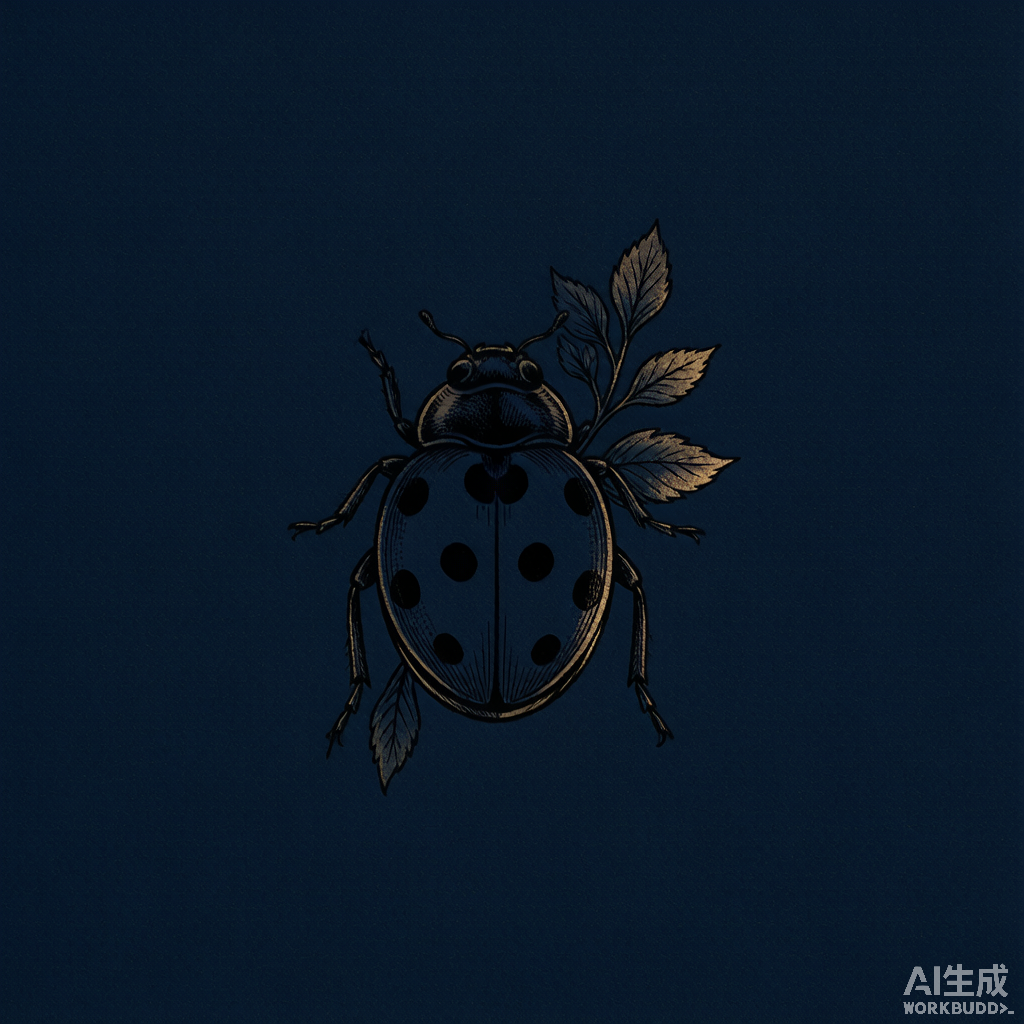
Ladybug tattoos are small charms of good fortune — a symbol of protection, luck, and simple joy. They represent love (a "love bug"), childhood innocence, and the belief that good things are coming. A ladybug is a lighthearted, hopeful design.
European folklore holds that a ladybug landing on you brings luck, and counting its spots predicts future blessings. In Christian tradition, the ladybug (Our Lady’s beetle) was linked to the Virgin Mary and protection of crops. They remain a universal symbol of gentle good fortune.
If you remember one thing about a ladybug tattoo: it means good luck, protection, and gentle joy. Across Europe the little beetle is a charm against misfortune — a "love bug" for couples, a sign of childhood innocence, and a quiet hope that good things are coming. The deeper cuts below cover where that meaning comes from: the Marian name (Our Lady’s beetle), the real entomology (a predator that protects crops), color and spot-count folklore, and the modern recovery and milestone readings. Pick the layer that fits your story.
The English name "ladybug" is older than it looks. The "lady" is the Virgin Mary: European farmers, watching the red-and-black beetles devour the aphids ruining their crops, credited the Virgin (Our Lady) with sending the beetles as help — so they called them "Our Lady’s bird" or "Our Lady’s beetle." German kept the devotion in Marienkäfer ("Mary’s beetle"); French still says bête à bon Dieu ("God’s creature"). That is why the ladybug reads as protection and blessing, not just cuteness: the name itself is a small prayer of thanks for a harvest saved. It is one of the few insect names that carries a religious etymology in plain sight.
The luck is not only folklore. Ladybugs are Coccinellidae, a family of roughly 5,000 beetle species, and most are voracious predators of aphids, scale insects, and mites. A single adult can eat thousands of aphids in its lifetime; growers have bought clusters of ladybugs for centuries to protect crops biologically — the classic case is the vedalia beetle, introduced to California to defeat the cottony-cushion scale on citrus. So the "protection" meaning has a literal root: this is the insect that arrives when plants are under attack and wins. Choosing a ladybug can mean "I protect what I love," backed by real natural history rather than superstition.
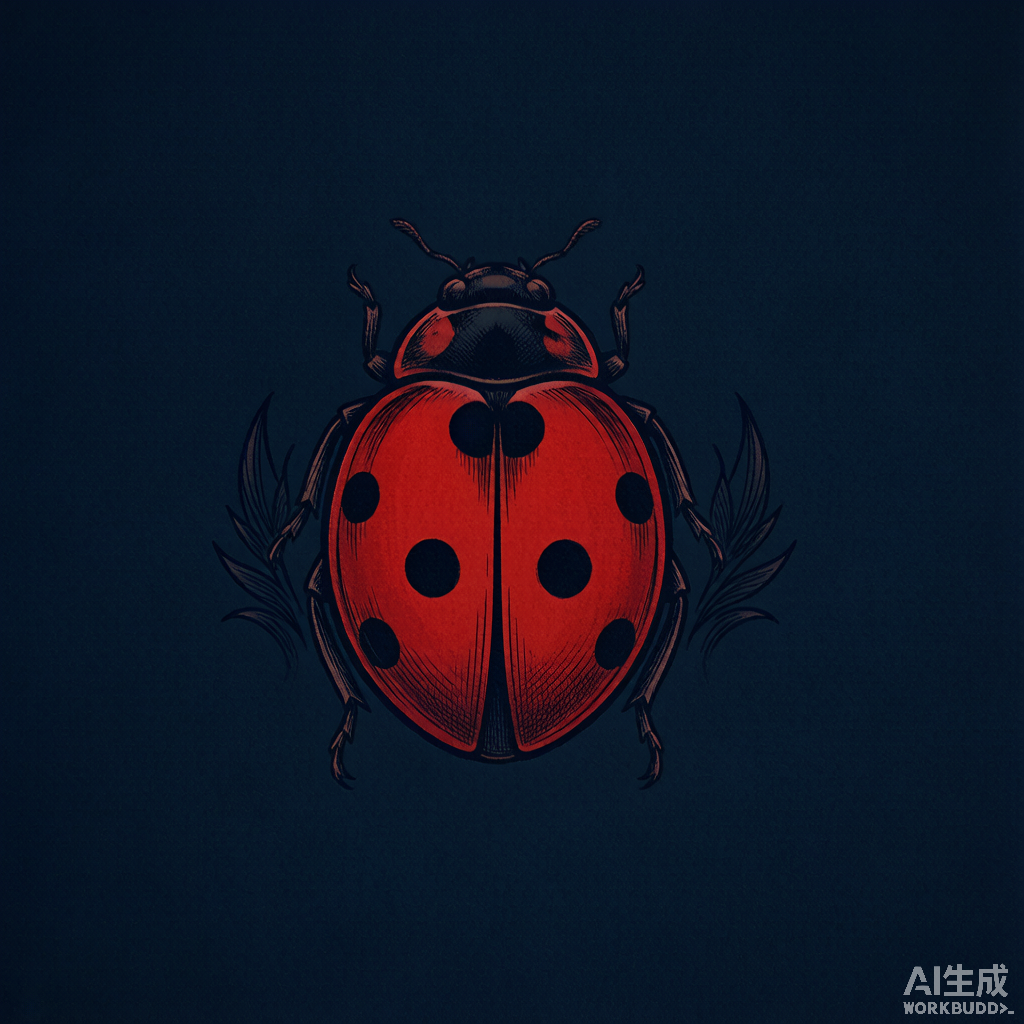
Color shifts the reading. Red is the classic — luck, love, and vitality, and by far the most common ladybug tattoo. Blue ladybugs are extremely rare in nature, so a blue ladybug tattoo reads as uniqueness, mystery, or a one-in-a-million person. Black ladybugs (or heavy black spotting) lean toward grounding, protection, and quiet strength rather than playful luck. Yellow ladybugs suggest optimism, sunshine, and cheer. Unless you are depicting a specific real species, choose the color for the feeling: red for joy, blue for rarity, black for steadiness, yellow for light.
Counting the spots is its own tradition. In much of Europe the number of spots predicts how many months of good luck (or future blessings) are coming your way; in Germany the spots were read as coins — a spotted beetle meant money on the way. Some versions say the spots show how many wishes will be granted, or how many children a woman will have. None of it is literal, but the habit turns a tiny beetle into a personal fortune-teller. If a specific number matters to you — an anniversary, a birth month, a lucky figure — ask your artist to match the spots so the tattoo carries the exact count.
Almost every culture that loves the ladybug also forbids harming it. The taboo is remarkably consistent: if a ladybug lands on you, you must let it crawl away on its own — flicking, crushing, or washing it off is said to bring bad luck, sometimes tied to the number of spots you "robbed" of their blessing. In farming regions the rule was strict because the beetle was a paid protector of the harvest. A ladybug tattoo can therefore double as a promise: I let good things leave gently, and I do not destroy my own luck. It is protection meaning turned into a personal ethic.
Ladybugs are team players. A ladybug and flower pairing blends luck with love or growth (a rose adds love, a lotus adds rebirth) — a favorite for wearers who want two gentle meanings in one small piece. A ladybug and clover is "double luck": the beetle’s fortune stacked on the four-leaf clover’s rarity. Ladybug and sunflower leans toward warmth and positivity. Because both elements are small and soft, these combinations work beautifully as fine-line or watercolor tattoos. Choose the pairing that names the feeling you cannot say in one bug.
Beyond luck, many wearers choose a ladybug for a deeply personal reason. In recovery and sobriety communities a ladybug can mark a milestone — the date it appeared, the number of days, a "little red beetle showed up right when I needed a sign" story. Others ink one for a child (childhood innocence), a surviving parent, or a fresh start after loss. Because the ladybug is small and non-threatening, it carries heavy meaning without a heavy image — a private emblem of "I made it" or "good things found me again." If the tattoo is a marker, weave a date or a small number of spots into the design.
Style carries the tone. A minimalist single-line ladybug is quiet strength and clarity — popular as a first tattoo or a subtle daily reminder. A cute, cartoon, or watercolor ladybug leans playful and is a common choice for women, kids, and couples (matching ladybugs for partners read as shared luck and affection). A realistic ladybug shows off the shell’s spots and sheen for a nature-lover. Geometric or dot-work versions add modern structure. Match the style to the story: soft and sweet for joy, fine-line for resilience, bold color for celebration.
Ladybug tattoos skew toward wearers who want meaning without menace: people marking luck, love, recovery, or a child; couples choosing matching charms; and anyone who simply finds the beetle hopeful. Placement follows the mood. A wrist or ankle ladybug is intimate and light — a private talisman. The forearm or shoulder suits a small scene with a flower. The back or thigh is the canvas for a cluster of ladybugs (a "swarm of good fortune"). Behind the ear or on the finger keeps it tiny and close. Size the bug to the story: small for a quiet charm, a cluster for a life chapter.
DESIGN GALLERY
Browse design ideas and find artists who specialize in this style.
Line-art design
Line-art design
1,000+
monthly searches
87%
want to book after reading
0
artists showcasing here
Are you a tattoo artist?
1000+ people search for ladybug tattoos every month. Your work could be the first they see. Upload your portfolio — it is free and takes 2 minutes.
First 10 artists to upload get 3 months Pro free.
red ladybug
ladybug and flower
minimalist ladybug
ladybug and clover
cute ladybug
Explore Ladybug tattoo variations and related designs.
Dragonfly
Change, adaptability, lightness, rebirth
Butterfly
Transformation, freedom, rebirth, beauty, new beginnings
Rose
Love, passion, beauty, balance, secrecy
Lotus
Enlightenment, rebirth, purity, spiritual awakening
Dragon
Power, wisdom, protection, strength, good fortune
Wave
Power, change, flow of life, resilience, freedom
Find, price, and book the design you're exploring.
Ladybug tattoos symbolize luck, protection, love, childhood joy. Ladybug tattoos are small charms of good fortune — a symbol of protection, luck, and simple joy. They represent love (a "love bug"), childhood innocence, and the belief that good things are coming. A ladybug is a lighthearted, hopeful design.
Ladybug tattoo imagery traces back to European folklore, Global. Ladybug tattoos are small charms of good fortune — a symbol of protection, luck, and simple joy. They represent love (a "love bug"), childhood innocence, and the belief that good things are coming. A ladybug is a lighthearted, hopeful design.
European folklore holds that a ladybug landing on you brings luck, and counting its spots predicts future blessings. In Christian tradition, the ladybug (Our Lady’s beetle) was linked to the Virgin Mary and protection of crops. They remain a universal symbol of gentle good fortune.
Yes — luck is the core meaning. Across Europe a ladybug landing on you is good fortune, and counting its spots predicts future blessings. A ladybug tattoo is a small, permanent charm against misfortune and a hope that good things are coming.
Red is the classic ladybug reading: luck, love, and vitality. It is by far the most common ladybug tattoo and the color people picture first — playful, warm, and hopeful. Choose red when the story is joy and affection rather than mystery.
Absolutely. The ladybug is often called a "love bug," and pairing it with a flower (especially a rose) blends luck with love. Couples sometimes get matching ladybugs as a shared charm of affection and good fortune.
Blue ladybugs are extremely rare in nature, so a blue ladybug tattoo reads as uniqueness, mystery, or a one-in-a-million person. It keeps the luck meaning but adds "one of a kind" — a good choice when the wearer wants to signal rarity rather than the standard red cheer.
It is "double luck": the beetle’s fortune stacked on the four-leaf clover’s rarity. The combination is a popular small charm for wearers who want two gentle symbols of good fortune in one piece, often as fine-line or watercolor work.
A ladybug with a flower blends luck with another meaning carried by the bloom — a rose adds love, a lotus adds rebirth, a sunflower adds warmth. It is a favorite for wearers who want two soft meanings in one small, hopeful design.
In folklore, yes. Almost every culture that loves the ladybug forbids harming it: if one lands on you, let it crawl away on its own, because crushing or flicking it off is said to rob you of its blessing. A ladybug tattoo can stand for letting good things leave gently.
In European folklore the spot count predicts good luck — often read as the number of months of blessing coming, or in Germany as coins on the way. Some say spots show wishes granted or children to come. None of it is literal, but many wearers match the spots to a meaningful number like an anniversary or birth month.
They can. The name itself is religious — "Our Lady’s beetle," linked to the Virgin Mary and the legend that she sent the beetles to save crops from pests. So protection and blessing are built into the symbol, even when the wearer’s own meaning is personal rather than devout.
Placement follows the mood. A wrist or ankle ladybug is an intimate, light talisman; the forearm or shoulder suits a small scene with a flower; behind the ear or on a finger keeps it tiny. A cluster of ladybugs on the back or thigh becomes a "swarm of good fortune" for a bigger chapter.
Many wearers choose a ladybug to mark a recovery, a sobriety milestone, or a fresh start — the "little red beetle showed up right when I needed a sign" story. Because it is small and non-threatening, it carries heavy personal meaning without a heavy image; weave a date or spot count in to mark the exact moment.
Get matched with the right meaning and style for your next tattoo.
Start Your Studio Free →Tattoo meanings are shaped by culture, history, and personal story — they are not universal or fixed. Sacred designs (e.g. Polynesian tatau, Indigenous, or religious iconography) carry deep meaning for the communities who created them; we share this for education and ask that you research and respect their origins before wearing them. This guide is not a substitute for cultural consultation.
See also our Color & Style Meaning Guide for how color and technique change a design's meaning.
EEAT: Written by Sarah Chen (Founder & CEO at InkFlow | 12 Years Tattoo Studio Operations). Verified against Smithsonian Institution. Cultural and historical information is sourced from academic references and is provided for educational purposes. Meanings vary across traditions and interpretations.